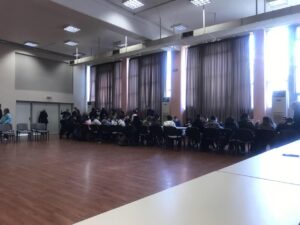
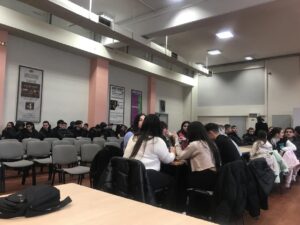
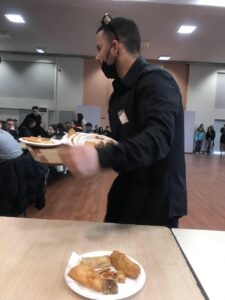
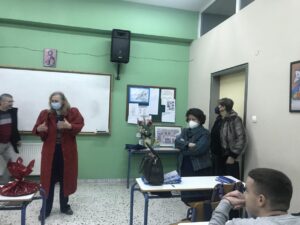
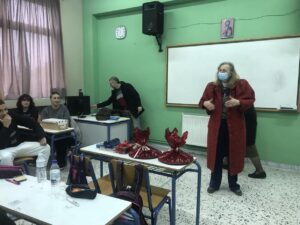
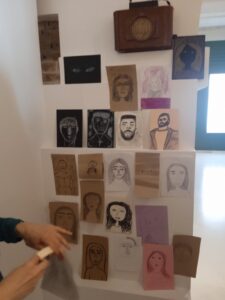
The Rotunda, the most significant monument in Thessaloniki, was built at the crossroads of two worlds, the Roman and the Byzantine. Its construction began at the end of the 3rd to the beginning of the 4th century AD when Caesar Galerius Valerius (293-311 AD) chose Thessaloniki as the seat of the eastern part of the Roman Empire. It is included in the Paleochristian and Byzantine monuments of Thessaloniki as a UNESCO World Heritage Site. In 2008, the archaeological site was awarded by the European Union and Europa Nostra. Europa Nostra is the pan-European federation for cultural heritage. When the Rotunda was built, what its use was, how to interpret its original, masterful decoration, and many other questions have received various interpretations, often diametrically opposed, without research reaching commonly accepted conclusions. So what’s going on with the Rotunda? A group of students interviewed Ms. Pelli Mastaora, an archaeologist at the Ephorate of Antiquities of Thessaloniki, who answered their questions. On the occasion of the guided tour of the Galerian Complex and the Rotunda, a group of B’ class students sought information in order to create a radio broadcast about these monuments of our city. The broadcast was aired on European School Radio on Wednesday, April 5, 2023.